From a pitching desk conversation to a nationally supported festival — Oujia Creative House designed a Chinese New Year concept for Nong Khai that used “food” as a bridge connecting Thai, Chinese, Lao, and Vietnamese cultures into one unforgettable experience.
Some projects don’t begin with a perfect brief. They begin with a conversation — and that’s exactly where Oujia’s creative team does its best work.
When Tek Kah Ji Nai Koh Foundation in Nong Khai approached us with a single request — “We want this year’s Chinese New Year to be different” — we didn’t reach for a festival template. We opened a map instead.
A 360-Degree View to Find the Right Answer
Nong Khai is more than a border province. It’s a cultural crossroads. When the team looked outward in every direction, it became clear that the audience for this event was far broader than expected — locals, visitors from neighboring provinces, and Lao nationals just across the Friendship Bridge. The real question wasn’t “How do we organize a Chinese New Year celebration?” It was “What will make every one of these people feel like this event was made for them?”
The answer was food.
Food as a Cultural Bridge: A Concept That Turned a Festival Into an Experience
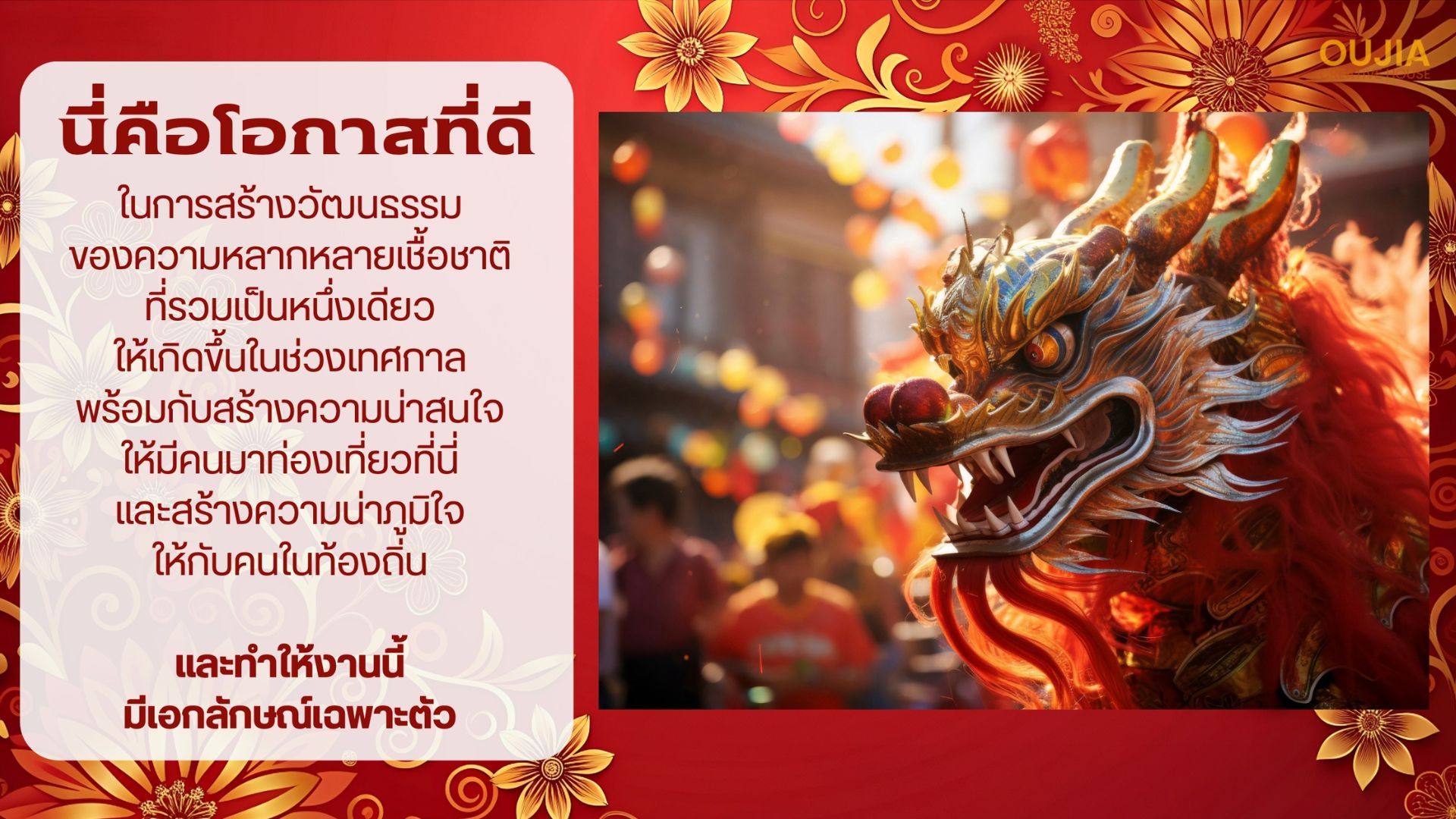
The creative team built the core concept around a single idea: the dining table is the one place every culture can sit down together. The four cultures naturally converging in this region — Thai, Chinese, Vietnamese, and Lao — would be woven together through food. Not as a row of vendor stalls, but as a layered experience where every bite told a story of cultural exchange.
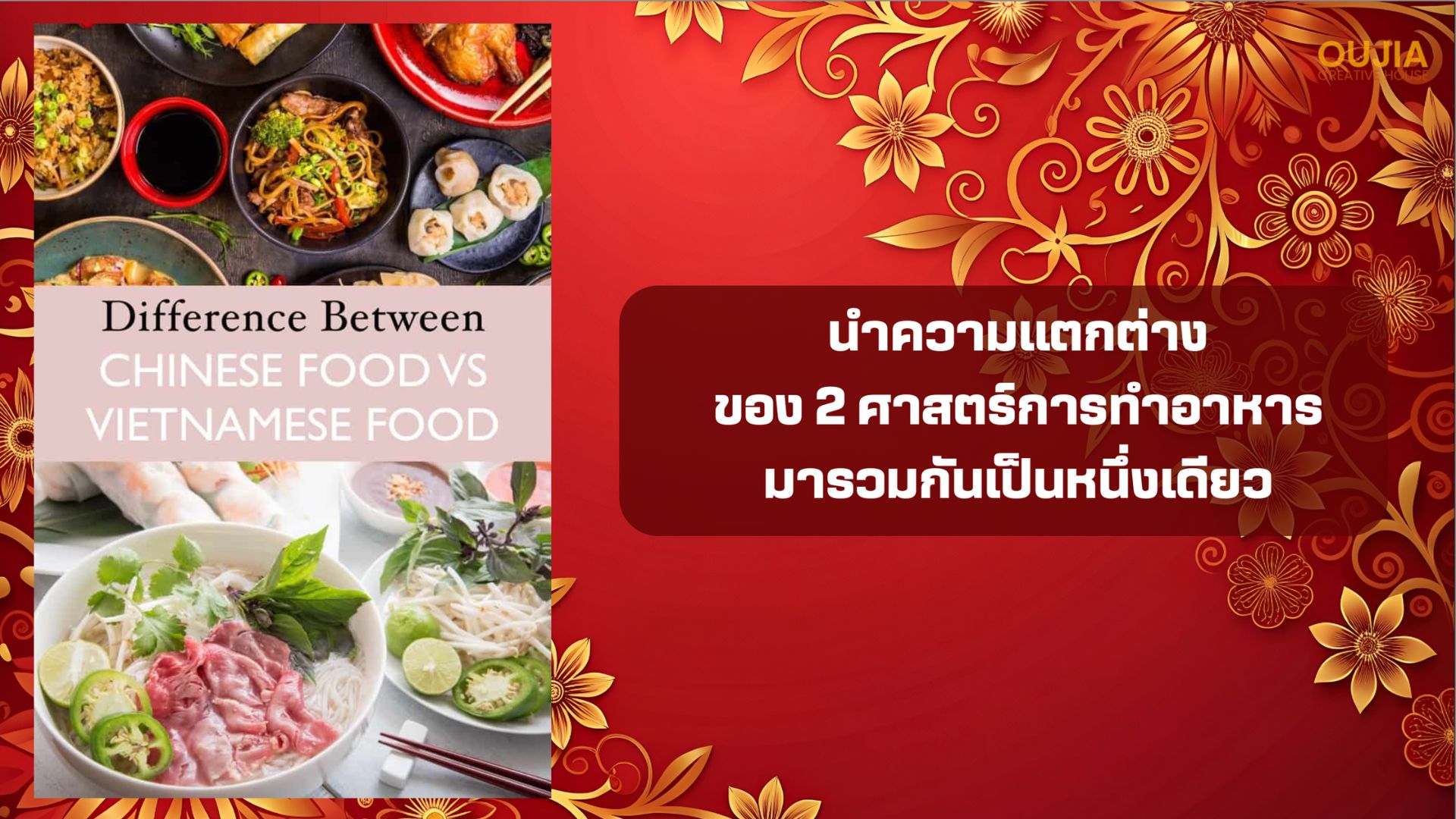
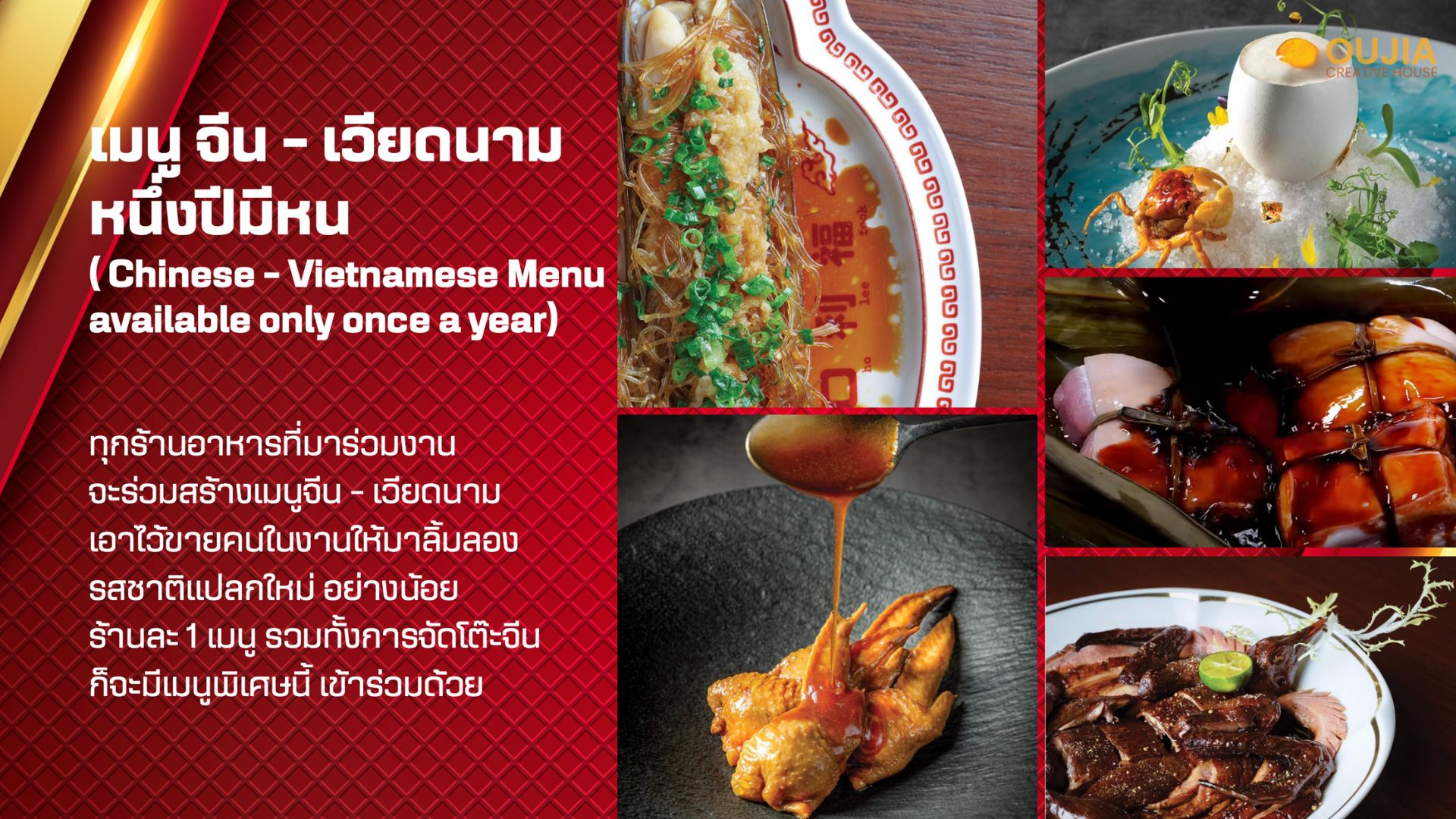
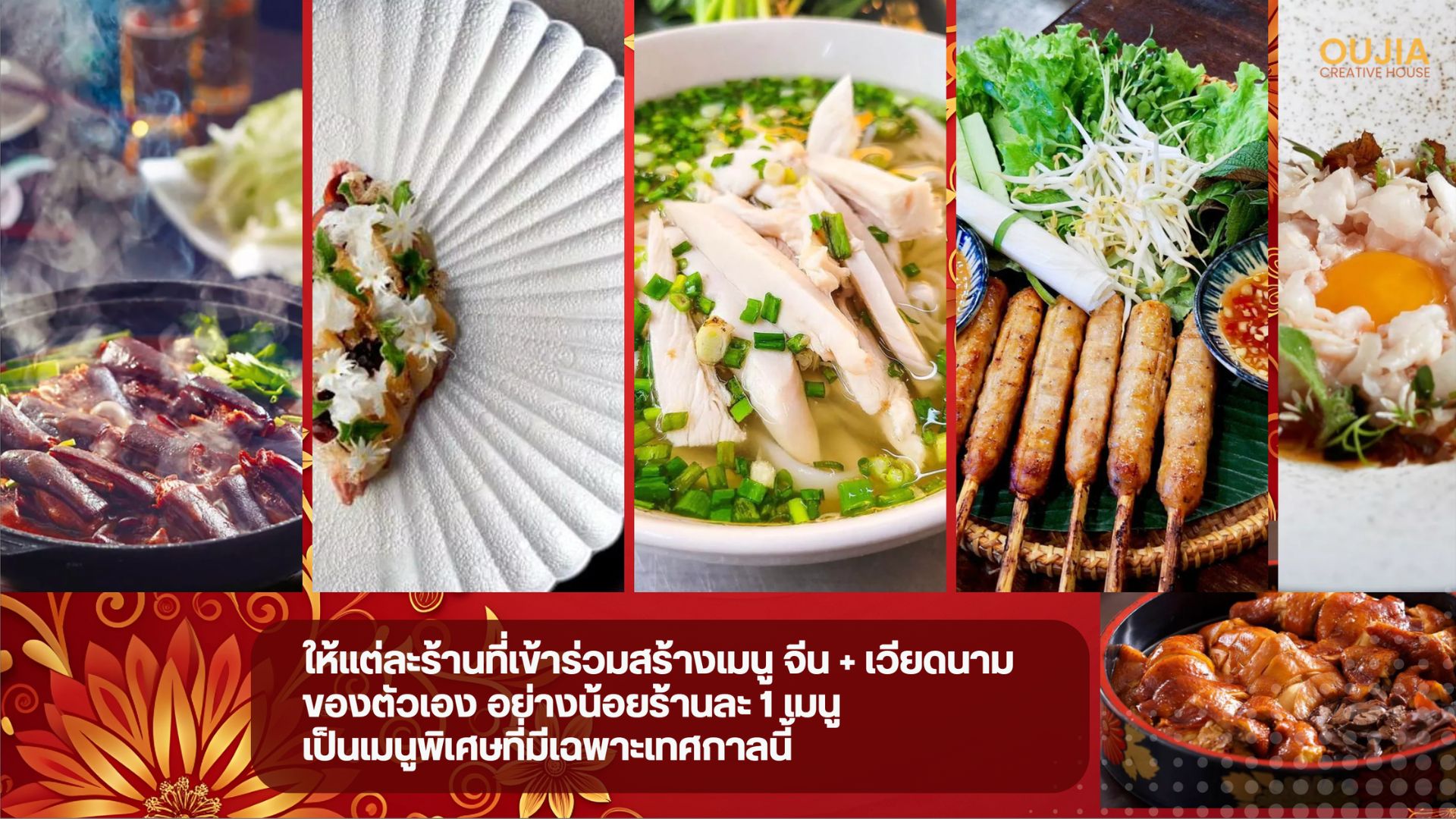
Chinese-Vietnamese Menu: A Once-a-Year Culinary Event
One of the signature activations the team developed was the Chinese-Vietnamese Menu — a challenge put to every participating restaurant to create at least one special dish that fused Chinese and Vietnamese culinary traditions, available exclusively during the festival. The strategy did more than spark curiosity among attendees. It created powerful urgency at the heart of the campaign: if you don’t come, you simply won’t get to taste it.
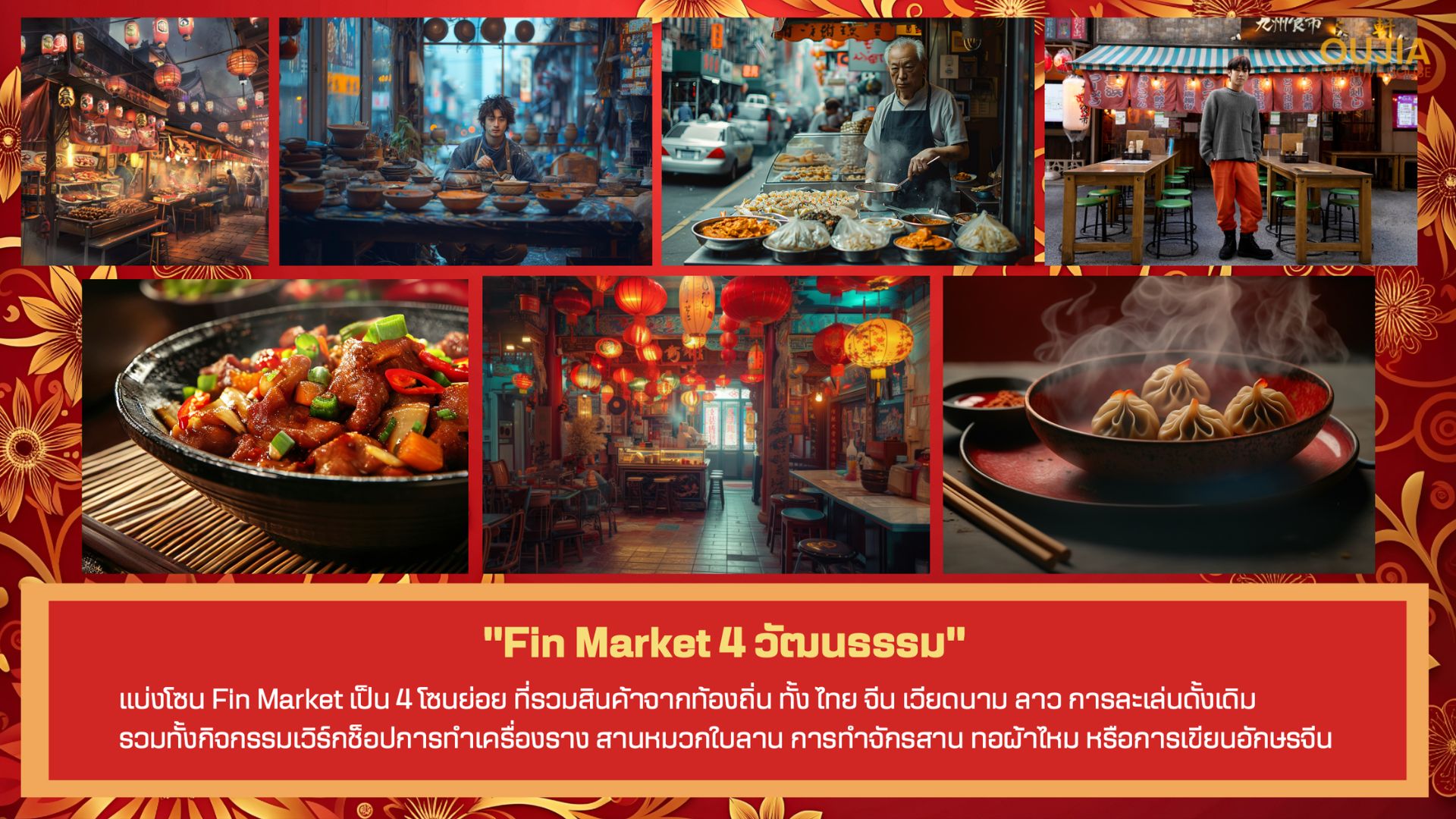
Fin Market 4 Cultures: When Our Concept Refused to Be Left Behind
When the Foundation brought in Fin Market to manage the night market area, Oujia stood its ground. We proposed immediately that the night market couldn’t just be a place to shop — it had to be an extension of the 4 Cultures concept we had established from the start. Fin Market took that direction and ran with it, curating a market filled with food, products, and hands-on experiences drawn from all four cultures — from local goods and traditional games to workshops in amulet-making, Lao bamboo hat weaving, silk weaving, and Chinese calligraphy. The result was a living, breathing space that gave locals something to be proud of while giving visitors a reason to explore every corner.
Content That Sparked Conversation: The Kids Who Wished They Were Born in Nong Khai
Beyond concept design, the team produced a social media promotional video built on a simple but deeply resonant idea. Using stock footage of adorable young children throwing tantrums, the clip used on-screen text to tell the story of kids who “wish they had been born in Nong Khai” — because this year’s Chinese New Year had the longest slide in the region and a lineup of activities that no child (or adult) could resist. A straightforward execution with a clear emotional hook, it stood as proof that strong storytelling doesn’t require a large production budget.